

I don’t really know how to start this post off with anything other than my brutally honest thoughts: I absolutely loved this movie. I love a movie that is objectively sad and doesn’t have a happy ending, but it makes you fall more in love and cherish the memories you have with your beloved, but also just makes you feel really sad. I love a movie that makes you really think, and ponder on your current and past relationships: what went wrong? What went right? What could you have done better? What made you fall in love with each other? I am someone who always has these questions bouncing around their head anyway, but Eternal Sunshine of the Spotless Mind brings them to the forefront in such a beautiful way. We are consistently thrown into a different memory of Joel and Clementine, some good and some bad, but Joel is always trying to hold on to the good parts of them and keep them with him. It shows us how even if things don’t end up how we want them to, it doesn’t negate or devalue the experiences we had along the way.
I have full faith and confidence that I am with my forever person – we made vows to each other promising just that; but if they left me tomorrow and wanted me erased from their memory, I would have no regrets for the life we shared and would choose it again over and over, and I find that to be beautiful. I found myself relating to Joel throughout this film: standing in the corner by myself at parties, too afraid to talk to anyone, having trouble sharing with others and opening up, and being utterly fascinated and attracted to, yet scared to death, by a spontaneous, fly by the seat of your pants kind of person. I think Jim Carrey did an excellent job of portraying the quiet and reserved yet curious and passionate character of Joel Barish.
Up until this point, Jim Carrey was widely known for his comedy career in such titles as Ace Ventura: Pet Detective, The Mask, Dumb and Dumber, and Bruce Almighty. He had dabbled in the drama world a bit with Man on the Moon and The Truman Show, but people mostly saw those roles as outliers and still viewed him as a comedy icon; that was, until 2004 when Eternal Sunshine of the Spotless Mind came out and Carrey’s performance blew people away. He was nominated at both the BAFTAs and Golden Globes but was up against stiff competition in Jamie Foxx for his role in Ray, and Leonardo DiCaprio in The Aviator. After this, it was no longer surprising to see Carrey casted in a serious role, although he didn’t end up taking too many more of them. In the 21 years since, Carrey has appeared in sixteen movies, with thirteen of them being classified as comedies – since 2020 he has only been in three movies, which are the Sonic the Hedgehog trilogy. He had such a big presence in the comedy world and in Hollywood in general in the 90s and early 2000s that I didn’t even realize that his career significantly slowed down after 2013. Seeing his performance in Eternal Sunshine certainly makes me wonder what could have been, if he took more roles like this, and what might have pushed him away from working as much as he once did.
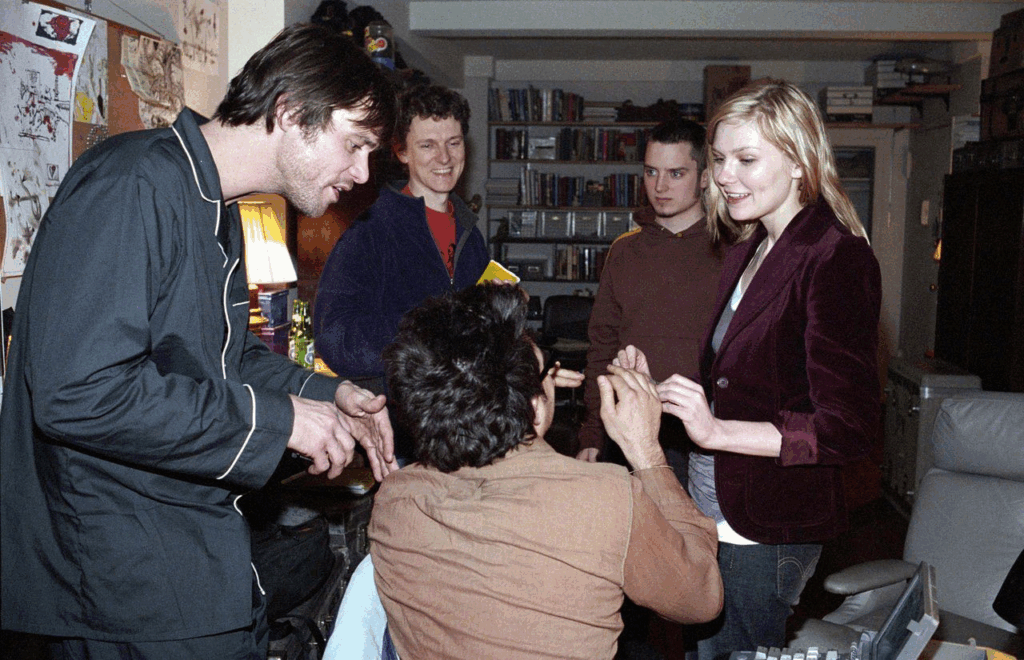
When it comes to the brilliance of Eternal Sunshine, we need to look at more than just the performances – but let me state, for the record, that everyone gave a killer performance in this movie, not just the leading two. Charlie Kaufman’s script was excellent, and paired with Michel Gondry’s direction, it really brought their vision to life. Gondry had developed the idea with Pierre Bismuth back in the late 90s, when Bismuth joked about the idea of being able to erase certain people from your memory with a friend who was complaining about their boyfriend. Bismuth even planned originally to carry this idea out as a sort of performance art – he wanted to send cards out to people, saying that someone had had them erased from their memory. Instead, Gondry decided to turn this into a story, which he later brought to Charlie Kaufman and the two developed a short pitch for it. We will get more into this later, but there were several key decisions made in this time that really helped turn the film into what it was and keep it from becoming an entirely different beast – one that, in my opinion, wouldn’t have worked nearly as well.
The way that they were able to take this idea and tell it in a non-linear fashion is quite remarkable; non-linear films don’t always have a good track record of success, and it takes a dedicated, smart, and capable crew to make it work. The way that they were also able to keep the viewers hooked and on track with Joel (Carrey’s character) traversing his memories with Clementine (Winslet’s character) was pretty astounding to me and kept impressing me as I was watching the movie. I think having a form of “meta” storytelling was fairly new to the film industry back in the late 90s and early 2000s, and Kaufman was quite burdened with it. In a 2004 interview with Script magazine, he mentioned how he was concerned with showing “the memories, Joel’s reactions to the memories, and Joel interacting with Clementine outside of the memories in the memories.” He was able to resolve this by having Joel be lucid and able to comment on his memories, but this concept still seems pretty ahead of its time to me for 2004. Speaking of which – the special effects for this movie also felt quite ahead of their time for what they were able to accomplish. I liken a lot of the scenes where Joel’s memories are being erased to the “dreams collapsing” sequences in Inception: the world around them is slowly disappearing or falling apart, but the protagonist is trying their hardest to stay in that world and keep those with them alive in it. Inception takes quite a different path with its grandiosity and more violent nature, but Eternal Sunshine is much more minimal and involves things like a house slowly collapsing around them or the color on books fading away. It was beautiful throughout and never felt “of its time” or outdated in any way.
With that being said, let’s remember this movie together with some categories.
By the Numbers
- Release date: March 19, 2004
- Budget: $20 million
- Box office: $74 million
- Run time: 108 minutes (1 hour, 48 minutes)
- Letterboxd rating: 4.2 ★
- My Letterboxd rating: 5.0 ★
- Rotten Tomatoes: 92% (Certified Fresh 🍅)
- Accolades: 97 total nominations, 34 total wins
- Two: This was Michel Gondry’s second feature film that he directed
Best Scene
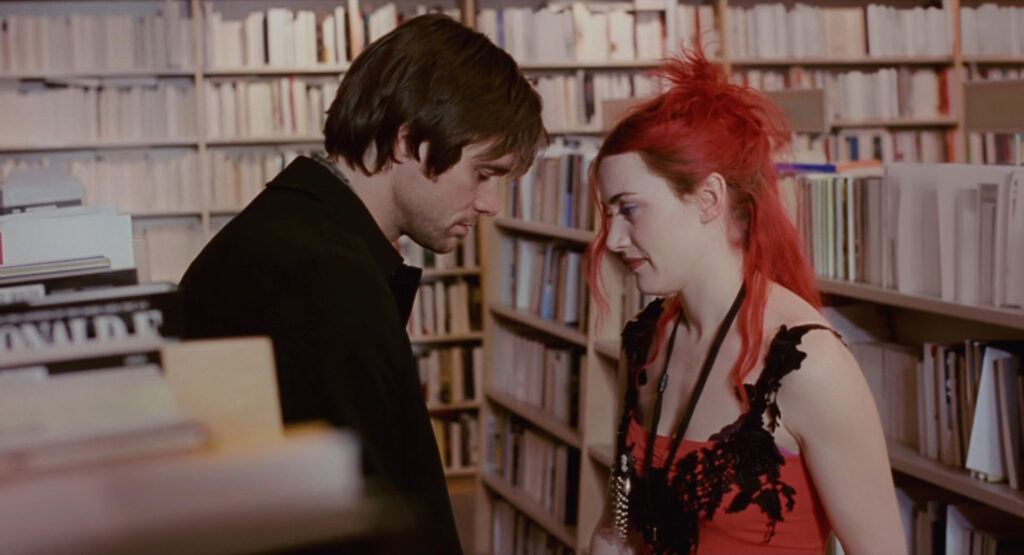
- Barnes and Noble: One of the many pivotal scenes of the movie, this one makes the list more for the visuals and cinematography than anything else. I love what is happening here within the story, where Joel is in one of his earliest memories with Clementine, and we get to see Clem play the memory out how it went before they “break the fourth wall” and discuss the memory itself as separate entities. If you haven’t seen the movie, that probably makes no sense at all to you but that is the best way I can describe it. Anyways, I just love the visual of Clementine putting books away and every so often we can see the books in the background losing all of their color as the memory is slowly being erased. That was such a difficult concept to try and put on the screen, but I love the simplistic way they went about it for this scene.
- The Beach House: Reliving the first memory he has of when they met, we follow Joel and Clementine as they wander around a vacant beach house in Montauk. Clementine is her typical free-spirited self and looking for some alcohol and glasses to enjoy the evening. Joel is apprehensive and feels like they should leave. And this is the perfect summation of their relationship, both the good and the bad. Joel is drawn to Clementine’s magnetism, her impulsivity, and her curiosity; Clementine is drawn to Joel’s child-like innocence, his reserved manner, and his curiosity in her. She is looking for a good time in a house that isn’t hers, and he just wants to leave before they get caught and suffer from shame and embarrassment. He gets the chance to talk with Clementine about what really happened that night all those years ago, and how he regrets that he walked out on her; all the while, we get this beautiful visual of the house slowly crumbling and water filling up the house as it sinks into the ocean. This was my favorite scene.
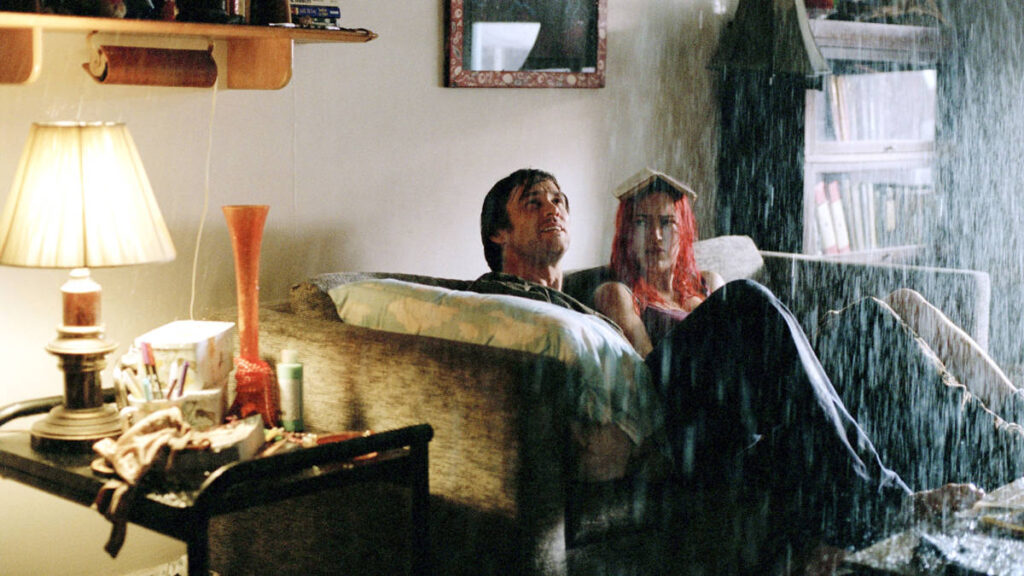
- Baby Joel: This was a really fun and silly scene that also has quite a lot of implications. Joel is trying to hide both Clementine and himself from the Lacuna employees, so he tries to find some of his memories that don’t involve Clem at all. We get a really cool visual of a memory of them sitting on the couch in his apartment and he begins to remember hiding from the rain in his childhood home, and the atmosphere of the two memories start to collide. We then transition into another cool visual of adult Joel in baby Joel’s body in a memory from when he was four years old, and there are some really fun plays on the visual perspective to make him look like a child without any real CGI or the weird anti-aging stuff that is far too present in movies these days.
- Wait: The final scene of the movie, this is the one that sealed the deal for me. This was already going to be a 4.5-star movie that would live in my mind for a long long time, but this last scene pushed it over the hump as a fully-fledged five-star movie that I just had to write about. It perfectly encapsulates what is so beautiful about love, and memory, and the time we get with certain people in our lives. Clementine knows they are destined to just grow apart from each other again, and he will say all those mean things about her, and she will grow bored with him again. And Joel simply replies, “Okay.” He knows that is their future, but he doesn’t care – he wants all that time back and all those memories with her so he can experience those ups and downs one more time. So beautiful.
What’s Aged the Best
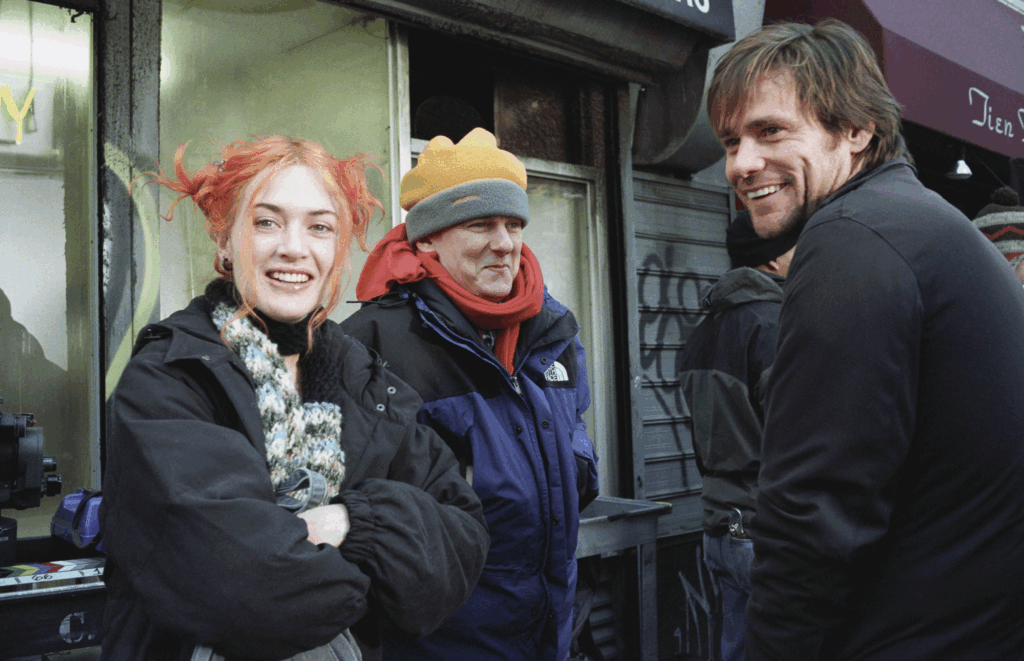
The special effects in this movie, as mentioned earlier, really aged well. This is owed quite a bit to Gondry and crew deciding to use more practical and in-camera effects as opposed to CGI, feeling that it would lend to the heightened reality of the story but not distract from it. There’s no bad green screening, no weird, pixelated CGI that was immediately outdated by the improvement of technology – just some really cool and pretty visual effects made possible by forced perspectives, hidden space, spotlighting, unsynchronized sound, split focus and continuity editing.
The performances have all aged really well along with the casting itself – if this movie came out in 2025 with the same cast it would be regarded as an ensemble cast with a incredibly high budget just to be able to afford to have Jim Carrey, Kate Winslet, Kirsten Dunst, Mark Ruffalo, Elijah Wood, and Tom Wilkinson all in the same movie. The screenplay itself has aged really well too – just a great and unique idea that wasn’t blown out of proportion or done the wrong way, which leads me to something I mentioned earlier; there were a lot of decisions made early on in the production that have aged well too. In the original production script, Clementine’s behavior becomes increasingly more robotic after each memory that is erased, but in the final script we have her playing it straight with the settings degrading and changing instead of her personality. Another choice was not having Naomi, Joel’s girlfriend and roommate, in the film at all. They originally shot scenes with Ellen Pompeo playing the role but ultimately decided that it made more sense to keep her off-screen, which I think was a great call because she could have distracted from the true love story and focus of the movie, which is Joel and Clementine. One final change was that Kaufman originally had the movie starting 50 years in the future with an older Mary trying to publish all of the erased memories of Lacuna patients – this version ended with an elderly Clementine once again erasing Joel from her memory. I like the final version better with where we leave Joel and Clementine, which is back in the present, where they are giving it one more shot.
What’s Aged the Worst
Literally nothing. I have no notes, there is nothing I would have changed about this…….okay, maybe don’t have Clementine call Joel the F word, but other than that we’re good. That’s kinda just more a sign of the times than anything else.
The Jason Clarke Award (What’s Their Name Again?)
This movie has an incredibly small cast, which is also very top heavy. I know all of the aforementioned stars, as well as the previously unmentioned David Cross, but I’ve never heard of or seen Jane Adams in anything, so she doesn’t count either. That leaves me with a little bit of an ironic pick, which is Deirdre O’Connell. The reason it is ironic is because prior to three days ago, she would’ve won hands down for me – I’ve seen her in a bunch but never knew her name or remembered her from anything. That was until this past weekend, when I saw Eddington in the theater (great movie by the way), where she played quite a memorable role that finally established her as Deirdre O’Connell in my mind, and not “that lady from that one thing.” Congrats, Deirdre!

The Jack Nicholson Award (Big Impact, Small Role)
Again, not a lot to choose from here just based on how the movie plays out and the screentime that everyone gets. Carrey, Winslet, Dunst, Ruffalo, Wood and Wilkinson are all out, which leaves us with Jane Adams, David Cross, and Deirdre O’Connell. David Cross and Jane Adams have some fun back and forth in the two scenes they get in the movie, but neither really sticks with you that much. But the one scene that Deirdre gets, she leaves her imprint on. Part of that is owed to the fact that she just gets a more pivotal scene in the story than the other two, but the way she delivered that last line was awesome: “Oh, your poor kid. You can have him – you did.” Congrats again, Deirdre!
The Roger Deakins Award (Best Cinematography)
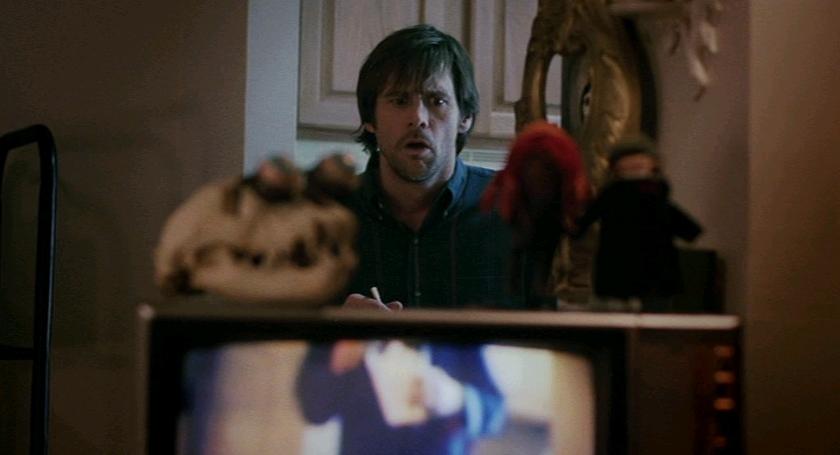
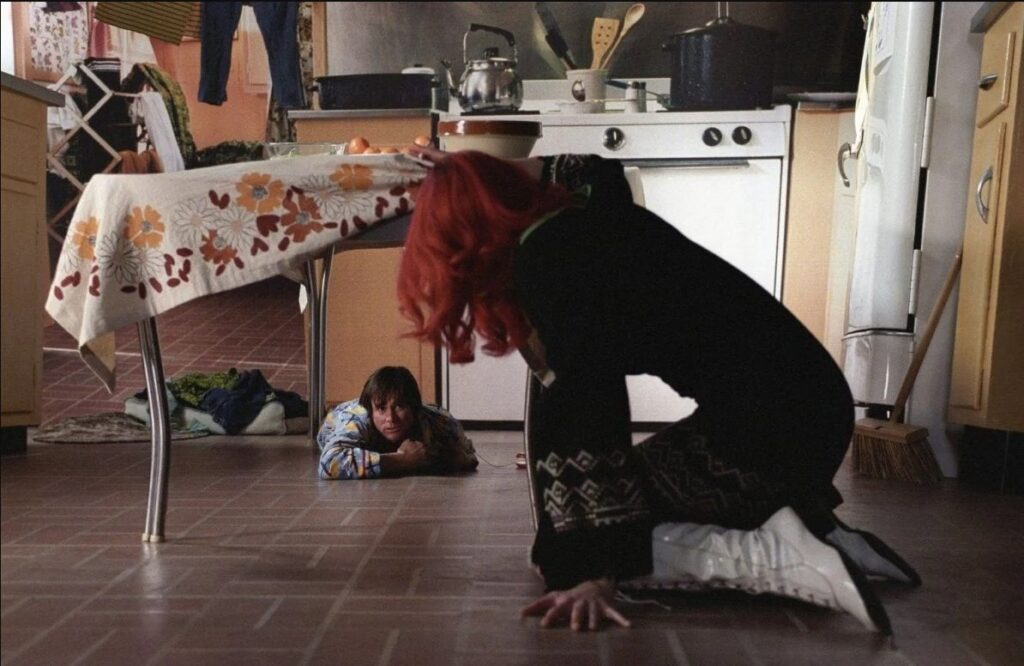
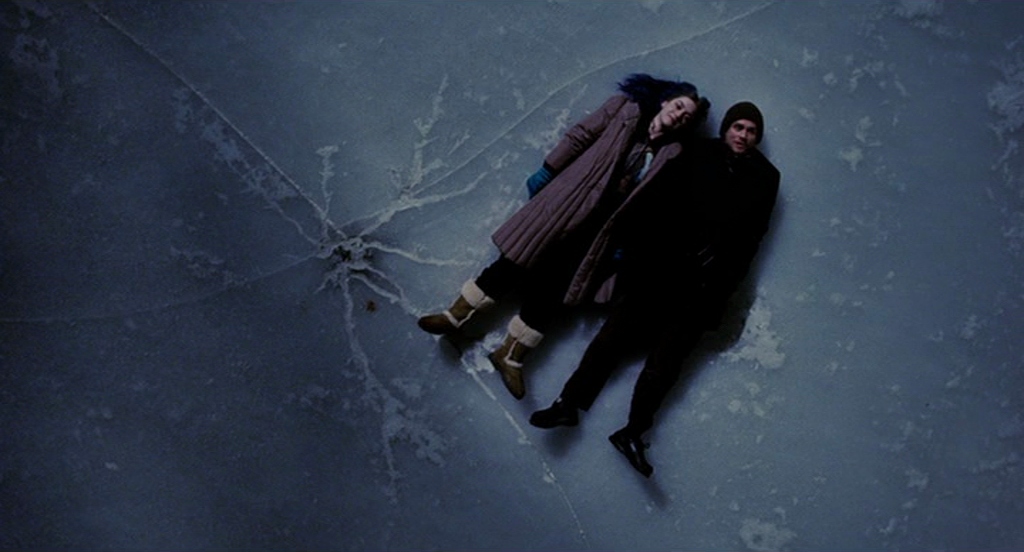
Lots to choose from here, and I’m not quite sure if I can just choose one. Every single scene where we are living through a memory that is being erased is so unique and incredible to watch. Every time it is different how the setting and Clementine are being erased, but each is so visually pleasing and exciting. I think the beach house slowly crumbling and flooding is my favorite but below are a few others that really stand out.

Six Degrees of Kevin Bacon
- Jim Carrey: 2 (Carrey appeared in The Number 23 with Rhona Mitra, who appeared in Hollow Man with Kevin Bacon)
- Kate Winslet: 2 (Winslet appeared in Romance & Cigarettes with Mary-Louise Parker, who appeared in R.I.P.D. with Kevin Bacon)
- Mark Ruffalo: 1 (Ruffalo appeared in In The Cut with Kevin Bacon)
- I checked all the major acting credits for this movie, and the highest number was two. The theory lives!
Would My Mom Like This Movie?
I think she would! At its very core, Eternal Sunshine is a rom-com, which is right up her alley. It is far more complex and nuanced than your standard rom-com, which is why it is so good, and why I think she would like it. The humor is sprinkled throughout enough to not make it too dark or sad of a film for her, but the humor also doesn’t take you out of it either. Kate Winslet and Jim Carrey (along with Kirsten Dunst) are also just immediately recognizable and are faces she can latch on to despite the potentially confusing non-linear storytelling aspect. Add it to your list, mom!
Conclusion
Here is a fun little anecdote to wrap things up: earlier this month, the New York Times released their Top 100 Movies of the Century list, according to critics and Hollywood personnel, as well as a separate list voted on by the readers. The list that was curated by the critics was predictably locked behind a paywall, but the reader-voted list was free to read, so I checked it out.3 There were quite a few films on there that I had never seen but knew about, so I decided to throw a bunch of them on my watch list, two of which included Eternal Sunshine of the Spotless Mind and Borat. Last week I watched Borat and thought, “Hmm. I remember visiting my brother in college back in 2006 when this movie came out, and he saw Borat with a bunch of friends while we were there, and I was a very jealous 8th grader. This will finally be vindication for not being allowed to see it all those years ago!” And then I watched it and was quickly reminded that it was a movie made for a bunch of 19-year-old college dudes to watch together in 2006, and not necessarily for a 32-year-old to watch on his computer by himself while he was supposed to be working in 2025. And then a week later I watched Eternal Sunshine of the Spotless Mind. Now I just find it very funny that both of those movies were on the same list, deservingly so, but for very different reasons. Borat was a first-of-its-kind “man on the street” comedy that inspired a generation of comedians and television shows that also happened to succeed incredibly well in the box office and even generate some Oscar buzz. Eternal Sunshine is just one of the best all-around movies of this century, hands down.
- Kate Winslet was also nominated for Best Actress in a Leading Role, but lost to Hilary Swank in Million Dollar Baby ↩︎
- The nominations were for Best Film – Musical or Comedy, Best Actor in a Leading Role – Musical or Comedy, Best Actress in a Leading Role – Musical or Comedy, and Best Screenplay ↩︎
- Honestly, I wouldn’t have really wanted to read the list made by critics anyways, they always have such weird tastes. ↩︎